
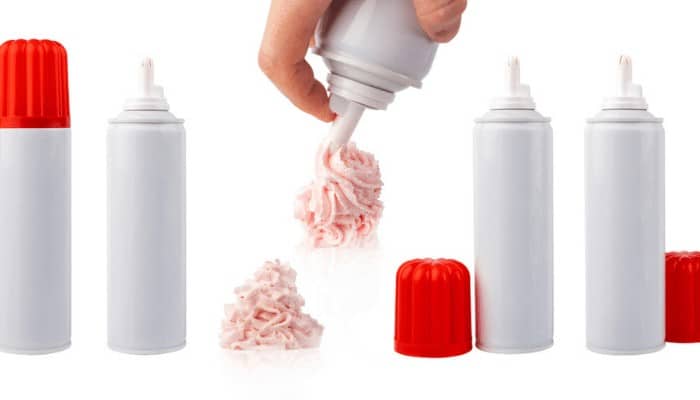
An empty whipped cream can may be recyclable, but acceptance depends on your local program. Finish the food normally, follow the label, and keep the aerosol container intact.
If cream remains, the valve is stuck, or the can is damaged, don’t puncture or dismantle it. Ask your local waste program how it wants the can handled.
Match the Can to Its Condition
Intact and Empty
Ask your recycler whether it accepts intact empty food aerosol cans and what to do with the loose plastic cap.
Partly Full
Keep it out of curbside recycling. Check the label, then ask your solid-waste or household hazardous waste program for a route.
Valve Will Not Work
Don’t force off the nozzle or valve. Tell the receiving program that food and propellant remain but normal dispensing has failed.
Leaking, Rusted, Bulging, or Damaged
Keep people away and call your local hazardous materials official or fire department. Get instructions before moving or transporting the can.
Finish the Product Normally
Use the whipped cream according to the label while it is safe and suitable to eat. Don’t discharge the can merely to make it appear empty.
Don’t spray leftovers down a drain or outside. If the food has spoiled or the dispenser fails, ask your waste agency how to manage the partly full can.
A can that stops dispensing can still contain pressure. Keep it away from heat, flames, sparks, and places where it could be crushed.
Prepare an Empty Can for a Confirmed Program
Check the label first. Then ask the local recycler whether empty aerosol cans go curbside, at a metal drop-off, or somewhere else.
Remove only a loose plastic cap if the recycler requests it. Leave the nozzle, valve, and fixed parts alone.
Don’t drill, hammer, flatten, incinerate, or cut the can. Household tools don’t turn a pressurized container into safer scrap.
Handle a Can With Product Left
EPA says nonempty aerosol cans don’t belong in recycling bins. Local household hazardous waste programs may accept them, but you should confirm the product and quantity first.
Keep the can in its original labeled container and never mix its contents with another material. Let the receiver provide storage and transport instructions.
Food aerosols don’t receive one nationwide disposal rule. California, for example, directs some nonempty aerosols with hazardous propellants to household hazardous waste, but its rule doesn’t define every program.
Skip Scrap-Sale and Craft Ideas
One empty household can has little scrap value, and a facility may reject intact aerosols. Confirm a real destination before collecting cans or driving to a scrap yard.
Don’t reuse the container for a craft, torch, fuel, or storage. It is a nonrefillable pressurized package.
Our guide to disposing of aerosol cans explains how the same condition check applies to other products.