

A kitchen knife should reach its next owner, recycler, or waste crew with the blade fully covered and secured. First decide whether it is usable, repairable, or ready for disposal.
Then ask the recipient what it accepts. Local recycling rules differ, so secure packaging does not guarantee curbside acceptance.
Choose Reuse, Repair, or Disposal
A sound knife with a worn edge may only need professional sharpening. A bent, badly chipped, loose-handled, cracked, or heavily corroded knife may be unsuitable for reuse.
Do not test a questionable knife with your fingers. If you are uncertain, show photos to a professional sharpener or recipient before carrying it in.
For a usable knife, ask a local culinary program, tool library, reuse organization, or neighbor whether it accepts that exact type and condition.
Never leave an uncovered knife at a donation point. Tell the recipient that the package contains a kitchen knife and ask how it wants the handoff arranged.
Cover the Blade and Tip
Knife Packaging: An NYC Example
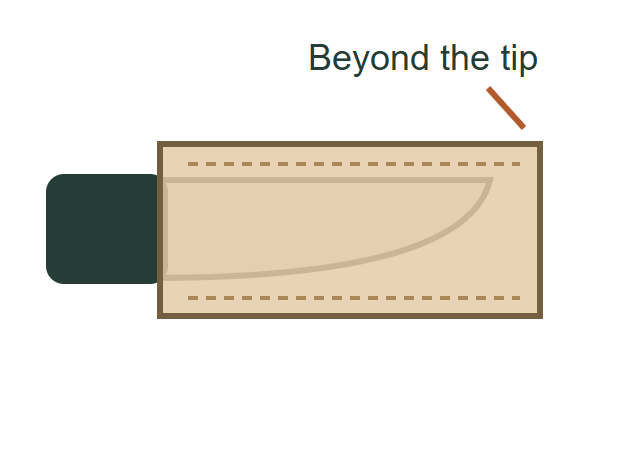
Cover the full blade and point with stiff cardboard. The blade is shown through the cardboard for clarity.
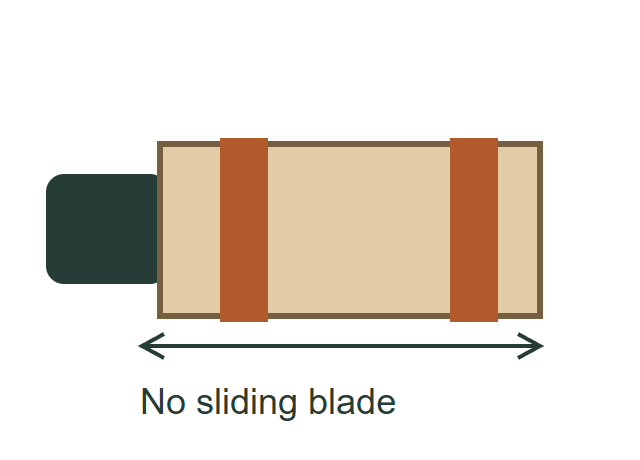
Tape the cardboard so the blade cannot slide out.
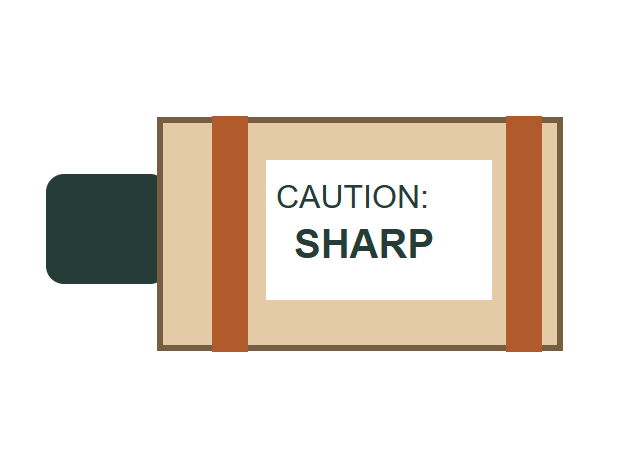
Label it CAUTION: SHARP, then confirm the local route.
Packaging example from NYC 311. Ask your local program where the packaged knife belongs and whether it needs an outer box.
NYC’s official knife-disposal instructions use that cardboard, tape, and warning-label sequence. Its final curbside recycling route applies only within NYC.
Use a cardboard piece long and wide enough to cover the entire blade and point. Fold it into a close sheath without pressing against the cutting edge.
Tape around the sheath so the blade cannot slide out. Keep the handle visible if that helps the receiver identify the item.
Place the sheathed knife in a rigid box when a recipient requests additional packaging. Label the outside clearly without exposing personal information.
Ask Your Local Program About Metal Recycling
Do not place a knife in a curbside cart merely because the blade is metal. Ask your municipal program whether it accepts knives and through which collection route.
Tell the program whether the blade is stainless steel, carbon steel, ceramic, or unknown. Ask whether handles, rivets, or mixed materials must remain attached.
Confirm packaging, labels, drop-off location, fees, and whether staff want advance notice. A scrap facility may refuse household knives even when it accepts other metal.
NYC tells residents to wrap metal knife blades in cardboard, tape the package, label it CAUTION: SHARP, and place it with metal, glass, and plastic recycling.
That NYC instruction is a local example. It does not establish the rule for another city or a private scrap yard.
Use Local Trash Only When Directed
If no reuse or recycling route accepts the knife, ask your waste provider whether securely packaged household knives may enter trash and how the package should be marked.
Place the package where children and pets cannot reach it before collection. Do not put a loose knife into a bag, box, chute, or dumpster.
Do not burn, melt, snap, or grind the blade to make it disposable. Those steps create injury and exposure risks without improving acceptance.
Keep Kitchen Knives Separate From Medical Sharps
Kitchen knives are not needles, lancets, or other medical sharps. Do not place them in a medical sharps kiosk or container unless that program explicitly approves them.
If your household also has needles or lancets, follow a dedicated sharps-container guide and your local medical-sharps program.
Related Disposal Guides
- How to Dispose of Broken Glass
- How to Dispose of Razor Blades
- How to Dispose of Frying Pans
- How to Dispose of Ceramic Plates